
Markets, Jade & Textiles of Antigua Guatemala: A Complete Guide
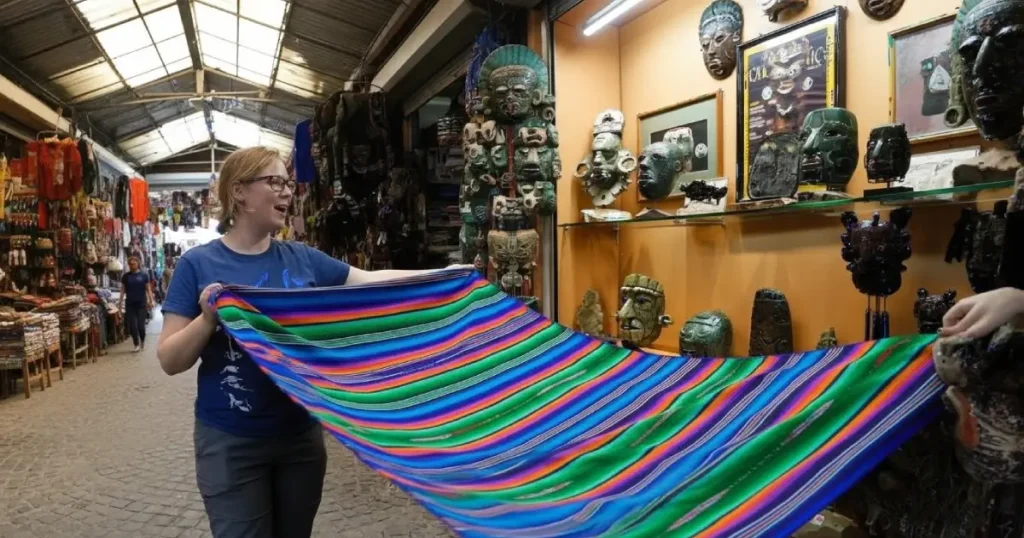
Discover Markets, Authentic Jade Jewelry and Mayan Textiles
Few places on Earth offer such an intimate window into living heritage as Antigua Guatemala's markets. Here, beneath the shadow of dormant volcanoes and crumbling colonial arches, commerce becomes ceremony—a daily ritual connecting contemporary travelers to traditions stretching back millennia before Spanish galleons ever touched Mesoamerican shores.
The cobblestone streets of this UNESCO World Heritage city lead to more than photogenic ruins and artfully restored convents. They guide the curious traveler into the beating heart of Guatemalan identity: bustling market halls where Mayan women sell textiles woven on the same backstrap looms their great-grandmothers used, where jade—the sacred stone of ancient kings—is still cut and polished by hands trained in ancestral techniques. For those seeking authentic cultural immersion, resources like Guatemala Food provide invaluable context for understanding how these markets preserve not just crafts, but entire cosmologies encoded in thread and stone.
- Markets Colonial Transformation and Persistence
- Traditional Guatemalan Textiles: Wearable History
- Guatemalan Jade: The Sacred Stone Reborn
- Where to Shop: A Venue-by-Venue Guide
- Mercado Central(Central Market)
- Mercado Municipal de Artesanías
- Nim Po't
- Mercado de Artesanías El Carmen
- Jade Maya Factory and Showroom
- Anthropological and Economic Perspectives
- Markets, Jade & Textiles
Markets Colonial Transformation and Persistence
The Spanish conquest transformed but never extinguished indigenous market traditions. Colonial authorities recognized the efficiency of existing systems and co-opted them, establishing regulated market days and designated trading zones. Yet beneath this administrative overlay, Maya merchants maintained their own internal codes, continuing to exchange goods through kinship networks and community obligations that colonial officials barely perceived.
This duality persists today. The Mercado Central operates simultaneously as a modern commercial space and as a repository of pre-Columbian social organization. The women selling textiles near the entrance aren't simply vendors—they're inheritors of specific trading lineages, occupying stalls their families have held for generations. The seemingly chaotic arrangement of goods follows an invisible logic rooted in indigenous spatial concepts foreign to Western commercial planning.
Traditional Guatemalan Textiles: Wearable History
The Backstrap Loom Tradition
The telar de cintura (backstrap loom) represents one of humanity's oldest weaving technologies, and in Guatemala's highlands, it remains the preferred method for creating ceremonial and identity-bearing textiles. The weaver secures one end of the loom to a fixed point—traditionally a tree or post—and the other end wraps around her waist, allowing body tension to control thread spacing with extraordinary precision.
This intimate physical connection between weaver and fabric produces textiles impossible to replicate mechanically. Each piece carries the literal imprint of its creator's movements, breath, and posture over the weeks or months required for completion. A finely brocaded huipil might represent 300 to 500 hours of continuous work—a temporal investment that explains both the pieces' cultural significance and their appropriate market value.
Principal Textile Categories
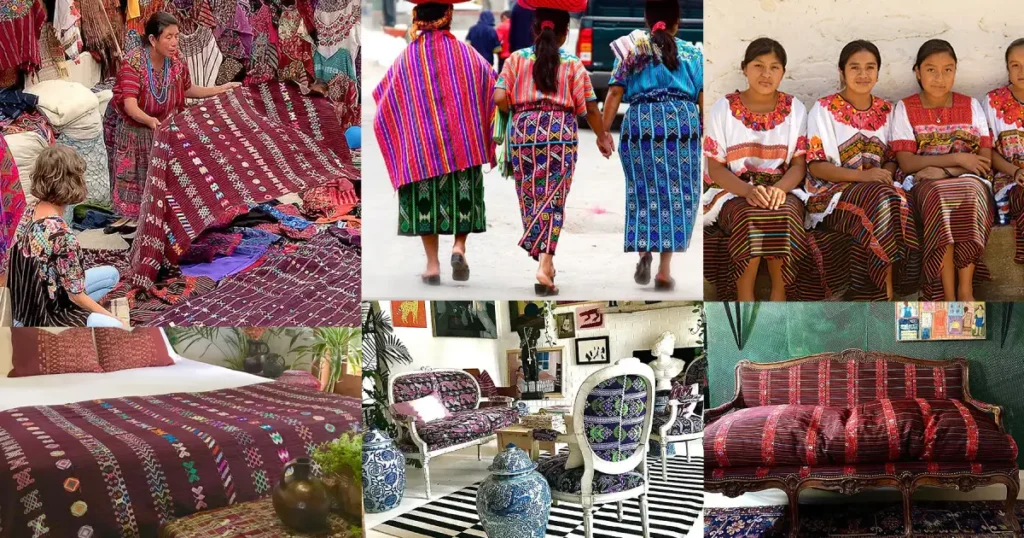
Huipiles represent the most elaborate textile tradition. These ceremonial blouses feature complex brocade work that may cover the entire garment or concentrate around the neckline and shoulders. Regional variations are dramatic—the geometric precision of Sololá differs entirely from the figurative narratives favored in Chichicastenango.
Cortes (wraparound skirts) provide the foundation for women's traditional dress. While less elaborate than huipiles, cortes communicate community identity through their specific stripe patterns, widths, and color combinations.
Fajas (belts) serve both practical and ceremonial functions. Some communities produce extraordinarily wide fajas featuring detailed pictorial scenes; others favor narrow, tightly woven bands in specific color sequences.
Perrajes and tzutes (shawls and multipurpose cloths) demonstrate the versatility of highland weaving. These pieces serve as baby carriers, market bags, head coverings, and ceremonial offerings depending on context and folding technique.
Guatemalan Jade: The Sacred Stone Reborn
Geological and Cultural Significance
Guatemala shares the distinction of hosting fine jadeite deposits with only one other nation: Burma (Myanmar). This geological rarity made jade extraordinarily precious to ancient Mesoamerican civilizations, who valued it above gold, silver, or any other material. The Maya associated jade with breath, life, and the maize god—the very essence of existence.
The jade found in Guatemala's Motagua Valley fault zone formed under specific tectonic conditions approximately 65 million years ago. This same material, emerging from identical geological sources, was carved into the death masks of kings and the pectorals of high priests throughout the Classic Maya period (250-900 CE). Contemporary jade workers aren't merely continuing a tradition—they're literally working the same stone their ancestors shaped over a millennium ago.
Where to Shop: A Venue-by-Venue Guide
Mercado Central(Central Market)
Character: Authentic, chaotic, overwhelming, deeply rewarding for prepared visitors.
A bustling local market with artisan stalls selling textiles, jade, wood carvings, and more; prices are often lower than tourist shops, but bargaining is expected.
The Mercado Central offers the most immersive market experience in Antigua, precisely because it wasn't designed for tourists. The vast majority of transactions here involve local residents purchasing daily necessities—vegetables, meat, household goods, prepared foods. This primary function creates the authenticity that makes visits so valuable.
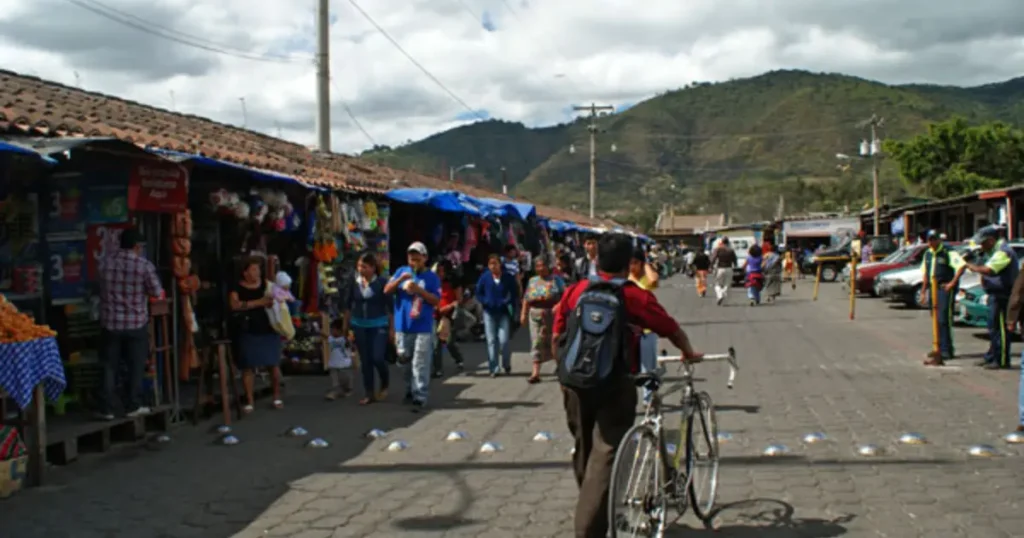
For textiles, navigate toward the upper levels where indigenous women from surrounding villages maintain stalls passed through families for generations. Quality varies dramatically; discerning buyers should examine weave density, pattern precision, and material weight. Natural fiber textiles feel noticeably different from synthetic alternatives—heavier, with irregular textures reflecting handspun thread.
The prepared food section merits serious attention. Dishes here cater to local workers rather than tourist palates, offering genuine representations of highland Guatemalan cuisine. Breakfast options include black beans, fried plantains, fresh eggs, and hand-patted tortillas pulled from clay comals. Lunch brings heavier fare: pepián (a rich, seed-thickened meat stew), hilachas (shredded beef in tomato sauce), and substantial beef broths designed to fuel afternoon labor.
Mercado Municipal de Artesanías
Another good handicraft market area, similar to the others for bargaining. Located in Antigua Guatemala, Sacatepéquez, the Handicrafts Market is distinguished by offering one of the most comfortable and pleasant experiences for purchasing artisanal pieces. Its spacious aisles house a wide variety of typical wares, while its open-air areas, adorned with colonial fountains, create a picturesque and welcoming atmosphere.
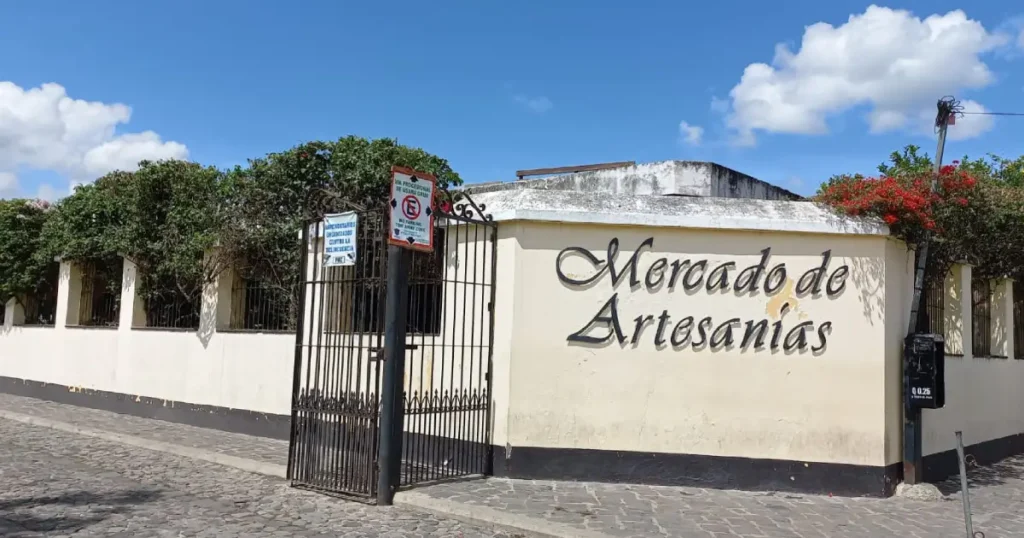
In this space, visitors can find traditional ceramics, handcrafted jewelry, typical textiles, and a wide range of products made by Guatemalan hands. Located on 4th Street West, the market invites you to discover the cultural richness and creativity of local artisans, who keep alive the traditions that define Antigua Guatemala.
Nim Po't
Character: Curated, educational, premium quality, higher prices justified by authenticity guarantees
Nim Po't represents the premier destination for serious textile collectors and visitors seeking guaranteed authenticity. The establishment functions simultaneously as retail space, cultural center, and educational institution—staff can explain the specific community origins and symbolic meanings of individual pieces.
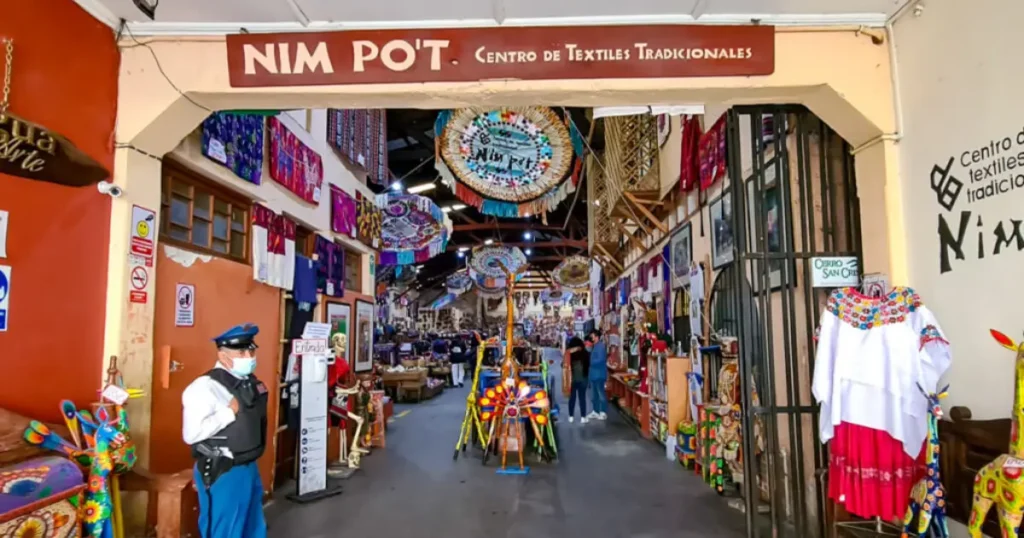
The textile collection emphasizes museum-quality huipiles, including antique examples no longer produced and contemporary pieces representing the finest work of identified master weavers. Prices reflect both material quality and the establishment's role in supporting indigenous communities through fair-trade practices.
Beyond textiles, Nim Po't offers an exceptional collection of carved wooden masks representing the various characters in Guatemala's syncretic dance traditions. These masks—depicting Spanish conquistadors, indigenous nobles, jaguars, deer, and supernatural beings—connect to living ceremonial practices rather than mere decorative function.
Mercado de Artesanías El Carmen
Character: Atmospheric, moderately curated, excellent for woodwork and jewelry.A large store with set prices, making it ideal if you prefer not to haggle; known for quality textiles and a wide selection.
A great spot for souvenirs, featuring textiles and jade near the El Carmen church ruins; it's less crowded, but bargaining is key.
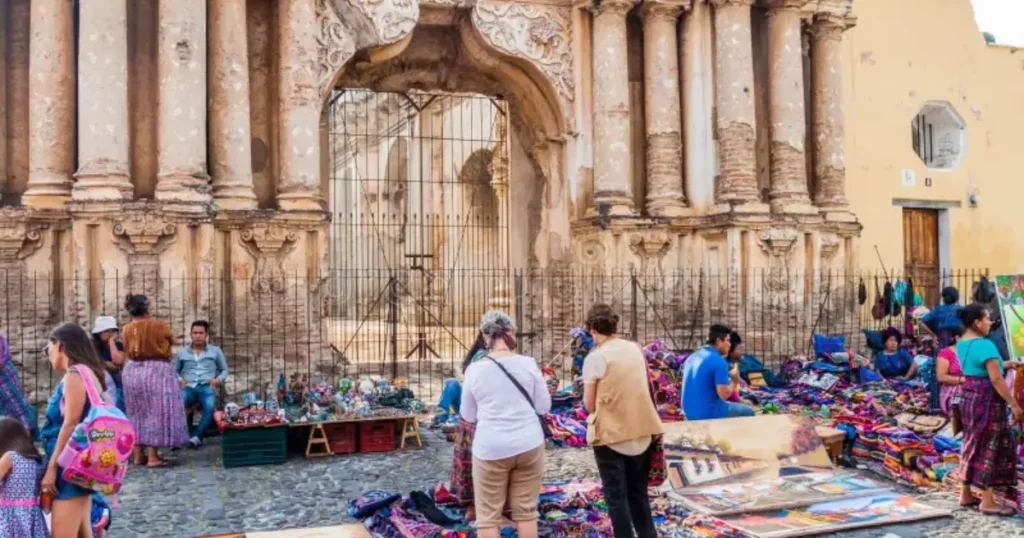
Located adjacent to the atmospheric ruins of the El Carmen church and convent, this market benefits from one of Antigua's most photogenic settings. Weekend craft fairs bring additional artisans who set up directly before the colonial ruins, creating memorable shopping environments.
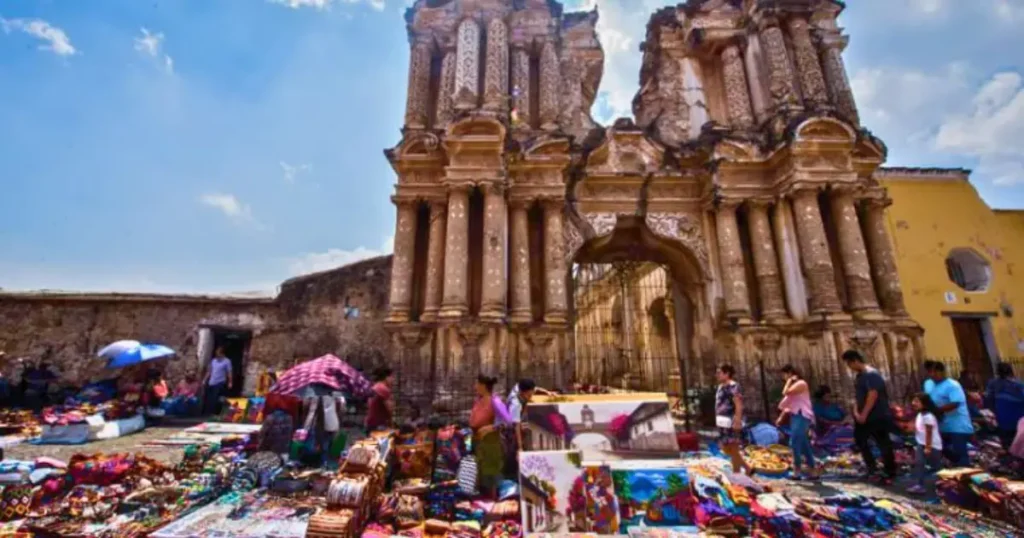
The market excels in several categories less prominent elsewhere. Woodworkers offer carved candle bases, zoomorphic figures, and the ceremonial masks central to highland Guatemala's dance traditions. Jewelry stalls feature jade alongside other semi-precious stones—agate, tiger's eye, obsidian—set in silver and gold-washed metals.
Leather goods and natural fiber items round out the inventory. Quality control is less rigorous than at Nim Po't, making careful examination essential, but prices generally run lower for comparable items.
Jade Maya Factory and Showroom
Character: Educational, specialized, premium jade with authentication. A famous factory, museum, and showroom where you can see jade processed and buy authentic pieces, from inexpensive to high-end.
Located at 4a Calle Oriente No. 34, Jade Maya offers the most comprehensive jade experience in Antigua. The establishment includes working factory space where visitors can observe cutting, shaping, and polishing operations—the same fundamental techniques employed by ancient Maya artisans adapted to modern tools.
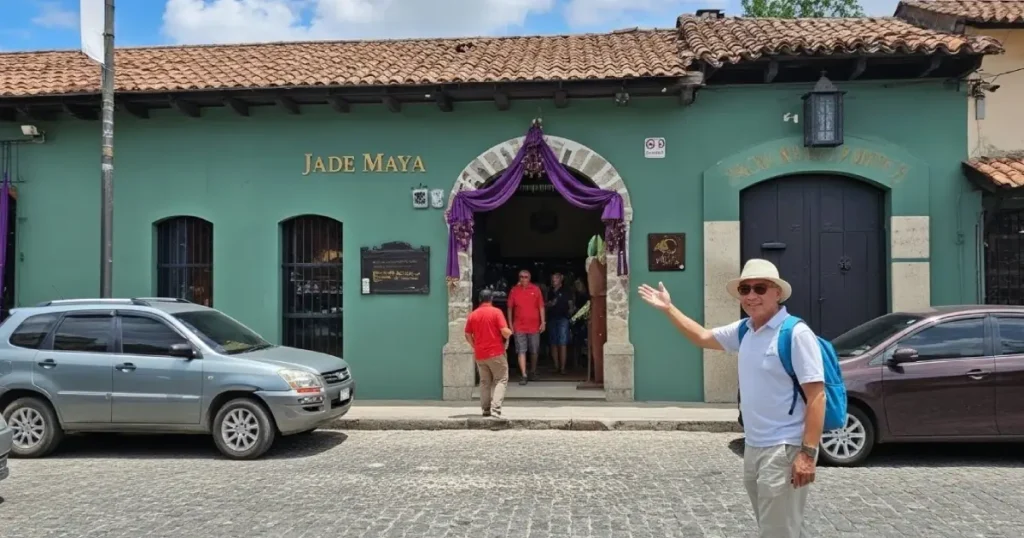
The showroom presents jade ranging from affordable contemporary jewelry to museum-quality pre-Columbian replicas priced for serious collectors. Staff provide detailed explanations of jade grading, color variations (Guatemala produces jade in white, black, blue, lavender, and the prized "imperial green"), and the cultural significance of specific carved forms.
Purchasing directly from Jade Maya eliminates intermediary markups while guaranteeing authenticity—important considerations given the prevalence of misrepresented materials in tourist markets.
Anthropological and Economic Perspectives
Western economic analysis struggles to capture what Antigua's markets actually accomplish. The Mercado Central functions simultaneously as commercial space, community center, information exchange, credit institution, and social safety net. Vendors extend informal credit to regular customers facing temporary hardship. Information about job opportunities, housing, and family events flows through vendor networks more efficiently than through formal channels.
This multifunctionality explains the market's resilience against supermarket competition. Modern retail offers standardized prices, climate control, and convenient parking—but cannot replicate the embedded social relationships that make traditional markets irreplaceable for many residents.
The Economics of Authenticity
Tourism creates complex pressures on traditional crafts. Demand for "authentic" goods provides income enabling artisans to continue practicing traditional techniques. Simultaneously, tourist preferences can distort production toward saleable items at the expense of culturally significant but less marketable forms.
The most successful artisan enterprises navigate this tension consciously. Jade Maya maintains pre-Columbian replica production despite lower commercial returns because such work preserves technical knowledge. Nim Po't documents the community origins of textiles, creating accountability that incentivizes quality and authenticity.
Sustainability Challenges
The Mercado Central faces existential pressures from multiple directions. Infrastructure deficiencies—inadequate lighting, ventilation, and sanitation—create uncomfortable conditions that erode customer loyalty. Supermarket chains capture younger consumers habituated to air-conditioned convenience. Rising Antigua real estate values pressure market spaces toward more profitable redevelopment.
Tourism itself presents risks. Unmanaged visitor flows can transform working markets into staged performances, displacing local customers and ultimately destroying the authenticity tourists sought. Successful cultural tourism requires balancing visitor access with protection of primary market functions.
Markets, Jade & Textiles
The markets of Antigua Guatemala resist easy categorization. They are simultaneously ancient and evolving, chaotic and precisely organized, commercial and ceremonial. To walk the aisles of the Mercado Central, to finger textiles whose patterns encode millennia of cultural memory, to hold jade carved from the same stone sources the Classic Maya revered—these experiences connect visitors to living traditions that have survived conquest, colonization, and globalization through sheer stubborn persistence.
The challenges facing traditional markets—supermarket competition, infrastructure decay, gentrification pressure—are real and accelerating. Their survival depends partly on visitors who understand what's actually at stake when they choose where to shop. The Mercado Central, Nim Po't, El Carmen, and Jade Maya each offer different access points to Guatemala's living heritage. Together, they constitute an irreplaceable cultural resource deserving both appreciation and protection.
For those seeking deeper understanding of how commerce, craft, and cuisine interweave in Guatemalan culture, dedicated resources like Guatemala Food provide ongoing documentation of traditions too rich for any single visit to exhaust. The markets will be here tomorrow, next year, and—with conscious stewardship—for generations yet to come.